
International Space Elevator Consortium
March 2026 Newsletter
In this Issue:
President’s Note
Chief Architect’s Corner
SE Academic Challenge 2026 Winners Announced
ISEC Intern 2026 Announcement
Conference Proceedings for 2025 and Registration for ISEC 2026
Space Elevator Design Verification
Tether Materials
ISEC Terminology
Around the Web
Upcoming Events
Contact Us
President’s Note
by Dennis Wright
Members Make the Space Elevator Go Up
There’s a major study going on right now in ISEC on powering the space elevator climber. Bringing the climber from a standstill to around 200 km/hr will take megawatts of power. But what powers the study? ISEC members! All researchers on the study are members who volunteer their time. It’s also powered by your membership dues. Professional memberships at $50/year and student memberships at $25/year constitute a large part of ISEC funding and make possible our yearly (free) ISEC conference, programs such as summer interns, academic challenges for high school and university students, community outreach and education. They also support vital infrastructure including our webpage, teleconferencing, and e-mail.
If you are already a member, thank you! Your support is greatly appreciated. If you’re not a member and like reading this newsletter, please consider making a donation to ISEC, or better yet, becoming a member. You can do so by going to the bottom of any of the pages at our website and clicking “Donate”, or go to:
https://www.isec.org/membership
and sign up there.
Don’t forget ISDC!
As I mentioned in my note last month, the International Space Development Conference is taking place June 4-7th. It’s in McLean, VA (just outside Washington, D.C). See https://isdc.nss.org/ for details. If you wish to present a talk, you need to submit an abstract by April 15th. If not, come anyway. There will be a great space elevator track.
Chief Architect’s Corner
by Pete Swan
Space Elevator Spaceports
Inside Modern-Day Space Elevators are some remarkable locations for customer support and mission success. As payloads of any tether climber may be released at any altitude depending on mission parameters, there are several locations that are valuable for their characteristics. They will be called Space Elevator Spaceports paralleling the history of spaceflight and their required launching into orbit. Instead of rockets burning to achieve orbit, spaceports will allow for several missions at each location. The accepted definition of space ports is currently:
“A spaceport or cosmodrome is a site for launching or receiving spacecraft, by analogy to a seaport for ships or an airport for aircraft. The word spaceport—and even more so cosmodrome—has traditionally referred to sites capable of launching spacecraft into Earth's orbit or on interplanetary trajectories.” (Roberts, Thomas G. "Spaceports of the World". Center for Strategic and International Studies. (2019))
With this definition, spaceports can be defined along space elevator tethers with several missions at each location. The obvious mission is liftoff and receiving of tether climbers with the result leading to moving payloads to customer desired locations. The key here is that once at a spaceport, the payload can be released at high velocity (depending on the altitude) or can be captured by the tether for further development. At each spaceport there will be several operations that are integral to similar operations in other transportation infrastructures such as: refueling, repairing, assembling, and then storage. These operations will enable the customer to store a series of space systems segments until they are ready to be assembled into a large spacecraft ready for movement to its mission location on the tether or release into a trajectory (with orbital characteristics of ellipses or circles) with huge energy/velocity. The individual characteristics of the following locations on the tether are descriptive of their unique locations.
Earth Spaceport: This location is the starting point (or end location) for space systems using this permanent space access infrastructure. Each customer payload would be loaded on tether climbers and then raised to its destination for operations or release at the higher locations. This spaceport would also be the terminus for incoming payloads from above. The operational aspects of this location would focus on accepting payloads from Earth based transportation infrastructure and loading them on tether climbers destined for higher locations. It would also be planning the reception of payloads coming down the tether destined for locations around the world. This translation of mission payloads from one permanent infrastructure to another will be its main mission while focusing on daily, routine, inexpensive, and safe operations.
GEO Spaceport: The GEO Spaceport will be focused upon receiving payloads from tether climbers to conduct missions in the GEO Region. This would include off-loading, storage, and necessary support for each customer payload. One mission that will be very important will be the assembly of payload segments into major space systems such as Space Solar Power satellites, navigation satellites, communication, and governmental missions. This spaceport will be one of the most significant segments of the permanent architecture as the missions will be supporting the Earth
Apex Anchor Spaceport: The top of the tether has the fastest moving spaceport with exciting missions such as planetary defense, astronaut rescue, communications, and navigation support for CisLunar region as well as the routine missions of acceptance (capture) and release of mission space systems. The Apex Anchor velocity is extreme and will enable payloads released from there to get to the Moon in 14 hours and be released daily to Mars. The trip time varies to Mars from 61 days (fastest) to 130 days, on average. In addition, the new missions to asteroids and other solar system planets are enhanced over previous visits as they leave the Earth’s location at extreme velocities without being affected by gravity. One of the characteristics of space elevator spaceports is their ability to store and then assemble large space systems, one tether climber payload capability at a time. This leads to the realization that any size or shape space system can be constructed at this spaceport and then released towards their customer destinations with far more capability than can be launched from deep in the Earth’s gravity well.
Mission Oriented Spaceport: The discussions above on the three principal spaceports are easy to define because of their unique location along the tether. This category of spaceports is wide open as to height of its location along the tether. The purpose of each of these unique spaceports will be related to customer needs and located at the best location for the customer. The key is that this spaceport will have the same characteristics as the other ones in that it can receive/release payloads, store and assemble space systems, refuel and repair as well as conduct local operations. Some of the ideas for these mission-oriented spaceports are supporting hotels (such as low altitude spaceport – 400 km in altitude) designed to capture the tourist who wants to “see the Earth” from unique perspective. In addition, if there are repairs to be accomplished on the tether or one of the other spaceports, accommodations and workspaces can be brought up for a temporary spaceport. The location and duration of these mission-oriented spaceports will be defined as the customer discovers the strengths of each.
Note: see Architect Note #74 at https://www.isec.org/s/Space-Elevator-Architecture-Notes-74.pdf
Winners for the Academic Challenge 2026
by Dr. Paul Phister, Chair, SEAC-26
ISEC/NSS is proud to announce the winners of the Academic Challenge 2026
The International Space Elevator Consortium (ISEC) and the National Space Society (NSS) want to explore “Planetary Defense." How the Space Elevator system can enhance the safety of Earth is explored by students to design key elements for Utilizing AI Technologies for a Space Elevator Mission – Planetary Defense. As people begin to live and work in space this provides a unique capability to develop systems, on Earth, journey to orbit, in orbit on the Apex Anchor, or further out into space that can provide early warning and negation of threats to Earth. By researching and designing the infrastructure necessary to provide a planetary defense system, students contribute to solutions that benefit people living on Earth, the Moon, or Mars. Winners received $2,000USD for 1st, $1,000USD for 2nd and $500USD for 3rd.
1st Place: “Enabled Infrastructure for Persistent Planetary Defense” by Muhir Kapoor
Reward: $2,000USD
Video Link: https://youtu.be/3GCDDyIPPyM
Conventional planetary defense architectures will continue to face limitations arising from their dependence on ground-based detection systems and rocket-launched interceptors. These systems are constrained by launch readiness, limited deployment frequency, and lengthy decision-making cycles. This paper will present a conceptual framework for an AI-driven control system located at the Space Elevator’s Apex Hub, offering a transformative alternative to traditional, Earth-bound defense systems. The Apex Hub, positioned in geostationary orbit, will function as a permanent, powered, and logistically connected command node for planetary defense. Its stationary position relative to Earth will enable continuous line-of-sight coverage over vast regions of space, minimize communication latency, and allow the pre-positioning and maintenance of interceptor assets without the recurring cost or delay associated with launch vehicles. This architecture will shift planetary defense from a reactive, launch-based model to a proactive, pre-deployed defense posture capable of immediate response. Artificial Intelligence will serve as the core enabler of autonomy within this system. AI algorithms will fuse multi-source sensor data, predict the trajectories of potential threats, prioritize risks, and coordinate multiple interceptor units simultaneously. The integration of AI will enable the Apex Hub to make rapid, independent, and reliable decisions in real time, even under degraded communication conditions or during high-threat situations. By combining the Space Elevator’s persistent orbital infrastructure with AI-enabled decision systems, this approach will offer significantly faster response times, greater operational availability, and reduced long-term costs compared to conventional planetary defense architectures. The proposed system will represent a strategic evolution toward a continuous, intelligent, and sustainable defense paradigm, enhancing Earth’s preparedness against near-Earth objects and other extraterrestrial threats.
2nd Place: “ AI-Driven Earth Guard Interception Shield” by Yunosuke Kudo, Masaho Yanaka, and Akinari Ogawa
Reward: $1,000USD
Video Link: https://drive.google.com/drive/folders/15mtXPh71dv69Ey50Y2lb5NcmGcWkSr3e
Near-Earth Asteroids (NEAs), hazardous space debris, and intense space weather phenomena such as solar flares represent critical internal and external threats to both planetary security and the long-term sustainability of space exploration. Given the catastrophic potential of an NEA impact, prevention and mitigation are of the highest priority. This paper proposes an integrated and sustainable planetary defense system designed not only to comprehensively mitigate these diverse threats but also to repurpose the recovered materials for future space infrastructure development. The system employs Artificial Intelligence (AI) for high-precision NEA orbit determination and trajectory prediction. Once analyzed, the asteroid is neutralized through a Slingshot mechanism. The resulting fragments—along with pre-existing space debris in Low Earth Orbit (LEO) and Geostationary Orbit (GEO)—are then efficiently collected by specialized space elevator climbers equipped with parabolic capture mechanisms. Importantly, the recovered NEA material and debris are treated as valuable resources. These materials are transported to a GEO-based processing station, where they are refined into construction-grade materials to be used alongside resources mined from other celestial bodies, thereby supporting the expansion of human presence in space. Furthermore, the system incorporates advanced defenses against space weather. AI continuously monitors and forecasts solar activity. When a potentially disruptive event is detected, a large-scale magnetic shield—anchored by an Apex Anchor—is deployed to minimize damage to both orbital and planetary assets. This dual-use architecture transforms planetary threats into opportunities, establishing a sustainable framework in which defense against external hazards simultaneously drives and funds the next generation of space development.
3rd Place: “Apex Sentinel” by Ashwin Vijayashankar
Reward: $500USD
Video Link: https://drive.google.com/file/d/1dqxy59hfiKnKGnitLlxT0rBxiqHj7PcO/view
This paper presents the Apex Sentinel Array, a three-module, self-sustaining planetary-defence and orbital-resource architecture integrated into the main tether of a space elevator. The first module, the Planetary Defence Compartment, houses a high-temperature superconducting electromagnetic railgun engineered to launch dense tungsten kinetic impactors for momentum-transfer asteroid deflection. Tungsten is selected for its high density, mechanical robustness, and cost-effectiveness at the small masses required for precise orbital nudging. Co-located quantum-gravity sensors—based on cold-atom interferometry—provide early detection of local gravitational anomalies from near-Earth objects, complementing optical tracking when targets are obscured or poorly illuminated. Target assessment and mission planning are managed by a neuromorphic AI system, with human authorisation required for all defence actions.
Honorable Mention: “AI Integrate Space Elevator Planetary Defense System” by Leo Shiina and Maiya Qiu
Reward: Certificate
Video Link: https://youtu.be/4WyB9VXGPrE
It is estimated that several thousand asteroids pose a potential risk of approaching or even colliding with Earth in the future. To prevent such events, early detection, precise observation, and highly accurate orbital prediction are essential. Asteroids within the solar system absorb thermal energy from the Sun and emit infrared radiation, which allows observation from ground-based telescopes. However, to achieve greater precision in asteroid observation, simultaneous observations from two or more widely separated points are required to construct a complete three-dimensional orbital diagram. Our proposed space elevator–based planetary defense system utilizes the advantages of the space elevator structure to achieve this goal. The elevator features a tether length of 147,900 kilometers and a rotation radius of approximately 150,000 kilometers. By installing an infrared telescope at apex anchor, it can establish a baseline distance of observation 300,000 kilometers with coordination with ground-based observatories. This configuration enables 360-degree observation and, when integrated with an AI-driven analysis system, allows real-time orbit prediction with accuracy surpassing any existing Earth-based observation facility. When an asteroid on a potential collision course with Earth is detected, a series of AI-guided interception rockets will be deployed. They are initially laser-deflection rockets, followed by heavy impactor rockets if necessary. In Interception Stage 1, multiple laser-equipped rockets melt away at a single point, causing vapor thrust, altering the asteroid’s trajectory. If the change remains below the threshold, Stage 2 is activated, where heavy impactor rockets collide directly with the target to enforce a significant orbital shift. The heavy impactor rockets, launched from the space elevator’s apex anchor achieve an initial velocity of 11.2 km/s (Earth’s escape velocity). Because kinetic energy increases with the square of velocity, their impact energy far exceeds that of any ground-launched system, providing the final and most decisive means to alter an asteroids path. This concept not only enhances planetary defense capability but also demonstrates a novel and high-value application of the space elevator infrastructure, expanding its role far beyond transport as a global safeguard for Earth’s future.
Honorable Mention: “Asteroid Intercept System (AIS)” by Martina Zagonel and Liceo Bonavantura
Reward: Certificate
Video Link: https://youtu.be/nQ913UAj5b4
Humanity’s survival depends on its ability to defend Earth from the silent but inevitable threat of asteroids and comets. Planetary defense has long relied on concepts such as deflection, kinetic impactors, or nuclear devices—but the true challenge has never been the weapon itself, it has been our ability to reach space with the scale, speed, and resources required. Rockets alone cannot provide this. Among the most transformative technologies proposed for this mission is the space elevator, which would provide continuous, affordable, and large-scale access to space. The space elevator, with its Apex anchor facility, however, changes everything. By enabling the transport of massive payloads, infrastructure, and resources far more efficiently than rockets, the space elevator could become a cornerstone of a robust planetary defense strategy. Traditional asteroid defense concepts—such as deflection by gravity assist, kinetic impactors, or nuclear devices—require the rapid deployment of heavy and complex systems into space. Today, such launches are costly, limited in scale, and time constrained. With the advent of a space elevator, however, we could establish a permanent capability to assemble and deploy defense platforms in orbit or beyond. We propose a planetary defense architecture built on three pillars: (1) early detection, using space- and ground-based telescopes guided by advanced AI to continuously map asteroid trajectories; (2) modular assembly of defense assets, defined as battle stations permanently in space at convenient locations, enabled by the space elevator and its Apex anchor facility, where massive components could be transported from Earth and assembled in orbit; and (3) forward-deployed battle stations, positioned at translunar and-or Earth-Moon libration points. Each station, estimated at 50,000 tons, would carry missile interceptors equipped with extremely powerful nuclear bombs, plus propulsion, navigation, and guidance systems, ready to intercept threats as far as possible from Earth. The space elevator makes the AIS system not only technically feasible but economically viable. By eliminating launch bottlenecks, it allows repeated deployment, resupply, and scaling of planetary defense infrastructure. At the same time, the Apex facility would allow convenient housing in space for all assembly activities that would also be performed by advanced AI. Human operators and advanced AI would jointly oversee assembly and maintenance, while AI systems would manage rapid response operations. Such system, after being conveniently tested on a NEO asteroid will be permanently in space, ready to intercept any threatening asteroid, even with few days’ notice. In this way, the space elevator transforms planetary defense from a series of emergency measures into a sustainable, proactive shield for Earth—providing humanity with a realistic, affordable, and resilient means of facing future asteroid threats.
ISEC Intern 2026 Announcement
Larry Bartoszek, P.E.
V.P. and Chair, ISEC Intern Program
This year, ISEC is accepting applications from both undergraduates (in their third or fourth year) as well as graduates (Masters and Doctorate) to participate in the 2026 Modern-Day Space Elevator Transportation System research program.
Research Topics for 2026:
1. Options in deploying the 1st Tether. A graphene tether may not be deployable by the same method laid out in Brad Edward’s book which assumed a CNT tether. This study is about understanding how a multilayered single crystal graphene tether can be made and laminated together, and how such a tether could be deployed.
2. Research the heat management system of the space elevator climber from the surface of the Earth to the Apex Anchor. Getting rid of waste heat in space is a challenge since the only heat transfer method left in space is thermal radiation. Conceptual design of a refrigeration system and thermal radiator. How can we keep the PV arrays cool?
3. Research the application of space tribology to understand how to modify/redesign the commercial gear boxes and motors shown on the climber conceptual design model to work in a vacuum.
4. Research potential techniques of carbon fiber reinforced polymer structural design. Much of the structure of the reference conceptual design of the climber was changed from aluminum to carbon fiber reinforced polymer (CFRP) to reduce weight. CFRP products look different from metal fabrications and some shapes cannot be made by typical CFRP production techniques. The entire structure of the climber needs to be reevaluated in the light of proper manufacturing techniques with CFRP, with particular attention paid to metal-to-CFRP connections.
5. Open Topic at student option addressing a particular aspect of the Modern-Day Space Elevator Transportation System.
The interns will be conducting remote research for the months of May through August on a topic agreed upon with their mentors and presenting their results in a research paper. The intern will be paid $599 USD upon completion of the research.
Schedule for 2026 ISEC Intern Program
Initial Announcement on ISEC Intern Website – Mar 26
Provide potential research abstract to ISEC by – 15 May 26
ISEC to select Intern’s Research and assign a Mentor – 1 Jun 26
Intern to conduct Research with Mentor – 08 Jun 26 – 22 Aug 26
Periodic meetings (zoom) with Mentor for status/questions – 08 Jun 26 – 22 Aug 26
Final Research Paper submitted to ISEC Intern Director – 08 Sep 26
Intern can present Research (Video) at ISEC Conference – Sep 26
Intern can present Research (Video) at NSS Conference – Nov 26
Interested applicants need to send their abstract for evaluation to larry.bartoszek@isec.org or design@bartoszekeng.com.
Conference Proceedings for 2025 and Registration for ISEC 2026
Cancel your plans for this evening! Make some popcorn and start reading. The proceedings of the ISEC 2025 conference have been posted on the ISEC web site at:
https://www.isec.org/s/ISEC-2025-Proceedings.pdf
The conference last September was a success with attendees from around the world. There were 24 presentations over two days on a variety of subjects from the promise of space elevators to their economic impact, to technical studies, to social aspects. Something for everyone. Authors submitted 19 write-ups of their talks which comprise these proceedings.
In 2026 we intend to repeat this success. The ISEC 2026 conference will be held September 12th and 13th. Once again, the conference will be virtual and scheduled so that regardless of which hemisphere you’re in, you can attend at least half of it at reasonable hours. The conference is officially open for registration (free!) and abstracts, so if you have an idea or research that you want to present, please see https://www.isec.org/events/isec2026 for details.
Even if you don’t want to present, please register so you can attend the talks and discussion. Given last year’s attendance and limitations on the number of people that a virtual session can accommodate, it might be a good idea to register early.
Space Elevator Design Verification
by Peter Robinson
Article 5: The Start of Verification Testing in Space, “Pathfinder”, Part 2
1. Introduction
I previously discussed various project management methodologies and the Technology Readiness Level (TRL) concept used by NASA [1] and others. I then described how the Design Verification process would typically lag behind the TRL stages.
I covered Design Verification Phases 1-4 and the start of Phase 5 in earlier articles [2] [3] [4] [5], with the last describing two potential “Pathfinder” test cases involving free-flying 1000km orbital tethers. This article now continues by discussing how those “Pathfinder” tests would further the Verification of Space Elevator (SE) sub-system designs.
Key generic deliverables for Phase 5 are presented in Figure 1 below, making use of NASA TRL-5 definitions.
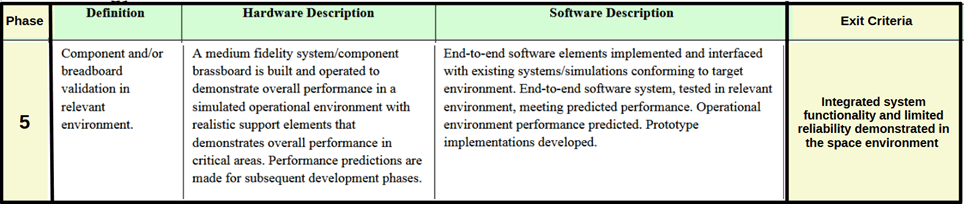
Figure 1: Proposed Design Phase 5 Definitions. Credit: NASA, P. Robinson
In 2018 I suggested requirements for this phase in a paper presented in Bremen (Germany) at the IAC conference [6], with TRL-5 (equivalent to Verification Phase 4) outlined in Slide 4, reproduced in Figure 2 below.
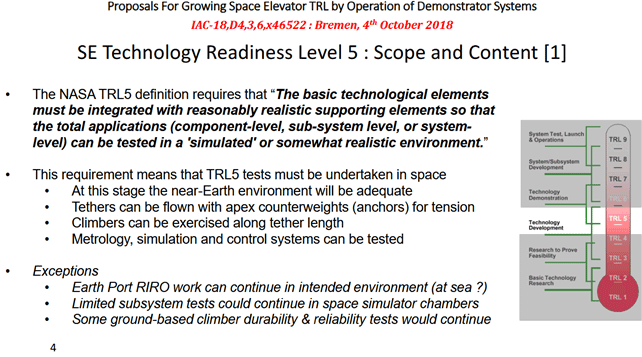
Figure 2: “Scope and Work Content for TRL-5”, from IAC-2018 Presentation by P. Robinson.
The two potential multi-purpose “Pathfinder” test case examples both use 1000km tethers: one non-rotating in Medium Earth Orbit (MEO) and the other rotating at perhaps 100,000km Earth altitude, depicted in Figures 3 and 4 below.
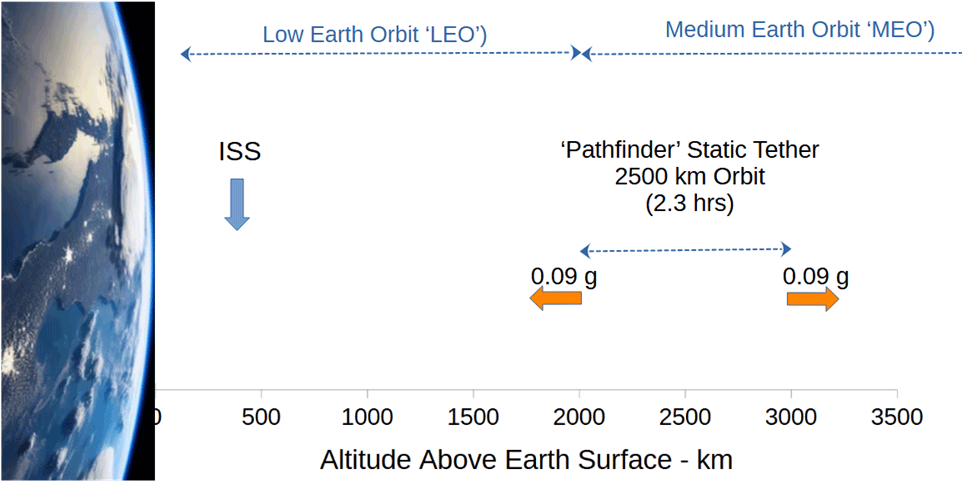
Figure 3: Schematic of “Pathfinder” Tether. Credit: P. Robinson.
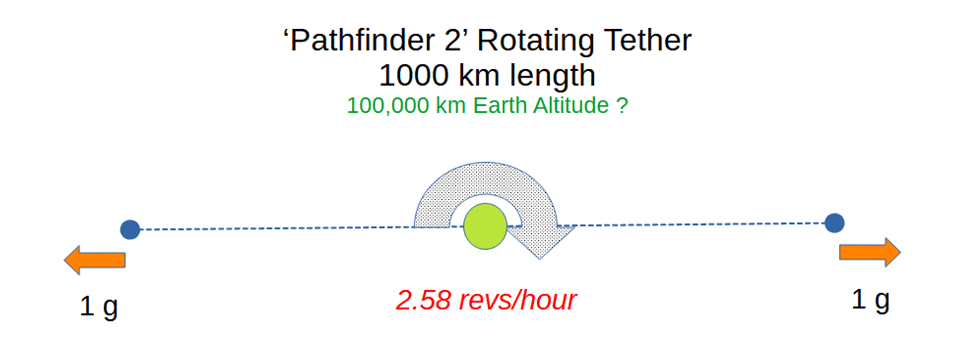
Figure 4: Schematic of “Pathfinder 2” tether at maximum rotation. Credit: P. Robinson.
See the previous article [5] for detailed design parameters for these systems.
Section 2 below describes how these test tethers might be used for the Verification of the three key SE sub-systems (“Tether”, “Climber”, and “Dynamics” as defined in the Ref [2] Section 4).
2. Design Verification Phase 4: Sub-Systems
2.1 Tether Material
The ISEC Position Paper in 2014 [7] suggested that the “Pathfinder” static tether could be made from a weaker material than that needed for the full SE system, but I believe this would not maximise the value of these tests. I also consider it unlikely that this stage of the project would be reached unless the material (at present foreseen to be Graphene Super Laminate, GSL) could be manufactured and demonstrated to be adequate in ground-based tests.
I previously proposed that earlier groundwork [4] would use lengths of full-strength tether material made on prototype machines, and similar (or better) material should be used for these “Pathfinder” space tests. This work would be the start of essential long-duration space exposure testing for the material, with the added benefit of assessing any degradation caused by climber passage.
Durability assessment would continue until, or even later than, the eventual deployment of a full-scale operational Space Elevator. At suitable time intervals a short length of tether could be removed and returned to Earth for detailed examination to look for any deterioration or change in material properties.
2.2 Climbers
Multiple climber design versions are likely to have evolved during earlier ground-based tests. The latest prototypes would be launched and tested on the “Pathfinder” test tethers to assess operation over the entire anticipated speed and load range. Design parameters such as speed capability, tether interface performance, and durability, reliability, steering accuracy, etc., would be assessed in the “real” space environment.
Unfortunately, the 1000km length of the test tethers means that powered “climbing” would only be possible over the 500km from the outer Anchor mass to the zero-g tether mid-point. On the non-rotating tether, the effective climber weight (and hence maximum drive power) would be low, representing climber operation on the Earth SE approaching the GEO node. The rotating tether would permit simulation of climber operation near the Earth, though the effective weight would fall more rapidly with time & distance than on the full-scale Earth system. Figure 5 below shows the climber speed and power on the tether rotating at a radial velocity yielding 1g at the Anchor with the “standard-design” 200kW/tonne specific power (= 4MW for a 20 tonne climber).
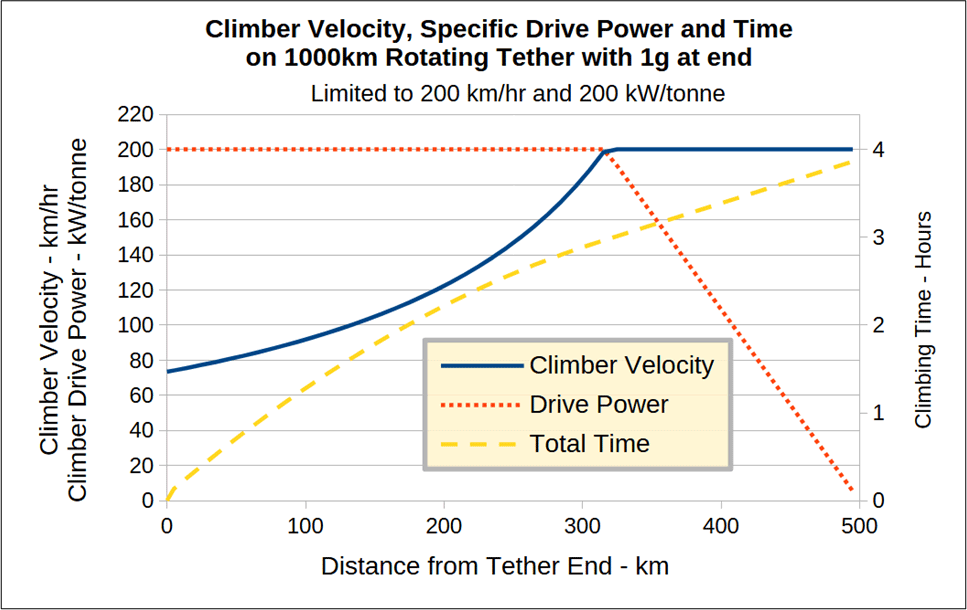
Figure 5: Climber speed, power, and time on rotating tether starting at 1g. Analysis: P. Robinson.
The climber could have a similar initial power (200kW/t) and climb speed as on an Earth SE, with the speed increasing more rapidly to 200 km/hr after just 330 km and 3 hours of climbing. At this point the drive power would reduce to limit the speed to 200 km/hr, falling rapidly to zero as the climber approaches the tether mid-point after another 0.9 hours.
On arrival at the tether zero-g mid-point the climber could be removed from the tether (testing the climber disconnect mechanism) for either remote inspection in space or return to Earth for more detailed examination. Alternatively, the climber could travel outwards to one or other end of the tether for a repeat climb test, but this outward journey would require braking and dissipation of the braking energy. The speed of this “descent” would be limited by the radiator size.
If the chosen climber power source is solar, or beamed from space, then climbers on either Pathfinder tether could use a prototype of the latest design scaled appropriately. If the chosen power supply is beamed from Earth, then the higher “Pathfinder 2” tether may be too remote for the chosen ground-based system to be used, requiring an alternative solution that would not contribute to system verification.
Transfer of many prototype climbers to and from the tethers would maximise utilisation of the tether systems, but delivery direct to either Apex would be a complex manoeuvre. Delivery to the zero-g midpoint is therefore likely to be the chosen option.
The Anchor masses described in the previous article [5] are unlikely to be sufficient for climbers up to 20 tonne gross mass due to excessive dynamic effects. I argued in a previous article ([3] section 3.1) that operational launch and manufacturing efficiency would be improved by having smaller climber modules that could be assembled into whatever total climber size is required. Tests of such smaller modules on the “Pathfinder” tethers should be feasible. If it were deemed essential to test 20-tonne climbers then more massive Anchors and a heavier “Pathfinder” tether would be required.
2.3 Dynamics
Space Elevator “Dynamics” include a number of interlinked aspects which may prove to be computationally challenging. Research work continues to address system simulation (including a number of recent papers on deployment scenarios), but there appear to be few extensive studies into other aspects. My suggestions for verification are therefore speculative and may not be appropriate for whatever system concept is finally selected. Whatever the concept, earlier ground-based tests will have only yielded limited verification due to their small scale.
2.3.1 Metrology
Any tether system control system must incorporate some form of simulation model needing Initial Conditions (ICs) in addition to a full system definition. The model will only be meaningful if these ICs represent the real-world system at a particular point in time, meaning that a Metrology system of some form will be required to supply measured values. It is likely that the ICs will include precise 3D measurements of the tether location and stress at intervals along its length: measurements of velocity may also be required, and tether diagnostic data might also be available.
Location and velocity measurements could be derived using GPS-type receivers distributed along the tether, or alternatively from reflectors (laser or radar?) in association with transmitters on the Earth or in space. The measurements will need to be periodically refreshed to continually update the model. The necessary refresh frequency will depend on the model details and required accuracy or confidence level.
The data transfer method to the processing system must be representative of what is intended for the final Earth SE system: extended operation throughout the “Pathfinder” deployment and testing would verify operational reliability in the space environment.
2.3.2 Simulation
The tether system simulation model would be updated in real-time by the metrology system data, then forecast motion and other parameters. Additional inputs may include any required or planned control actions (such as thruster forces or Earth Port motion) and other potential events (such as climber velocity changes).
Confidence in the Simulation system would grow from comparison between the forecast behaviour and actual measured values, with eventual verification being based on statistical confirmation that target error objectives have been met.
2.3.3 Control
The simulation output data would be processed by a complex SE control system, with additional input data (for the full-scale Earth SE) such as satellite (plus debris and meteoroid) orbital data, solar wind and Earth atmospheric condition forecasts, tether diagnostic data, and operational requirements such as planned climber launches. The system would review all inputs and determine the optimum solution to maximise climber throughput whilst also minimising the risk of any collisions to within required safety margins (perhaps greater than 6-Sigma probability).
The scope of the “Pathfinder” tests means that they may not be able to fully validate this system, though the 1000km scale should be adequate for some level of confidence to be demonstrated. The Pathfinder tethers may experience “real” satellite and debris encounters, requiring the use of thrusters and/or climber control to adjust forecast tether motion and maximise clearances, but “virtual” objects could also be generated to provide more difficult structured avoidance challenges.
The Control sub-system would clearly be highly complex, especially given the necessary real-time continuous operation. Such an AI-based system was described as an “Orbital Brain” in the winning entry of the 2026 SE Academic Challenge (SEAC) [9], reported elsewhere in this newsletter. This work suggests embedded stress & diagnostic sensors in the tether with distributed edge computing (as summarised in Figure 6 below).
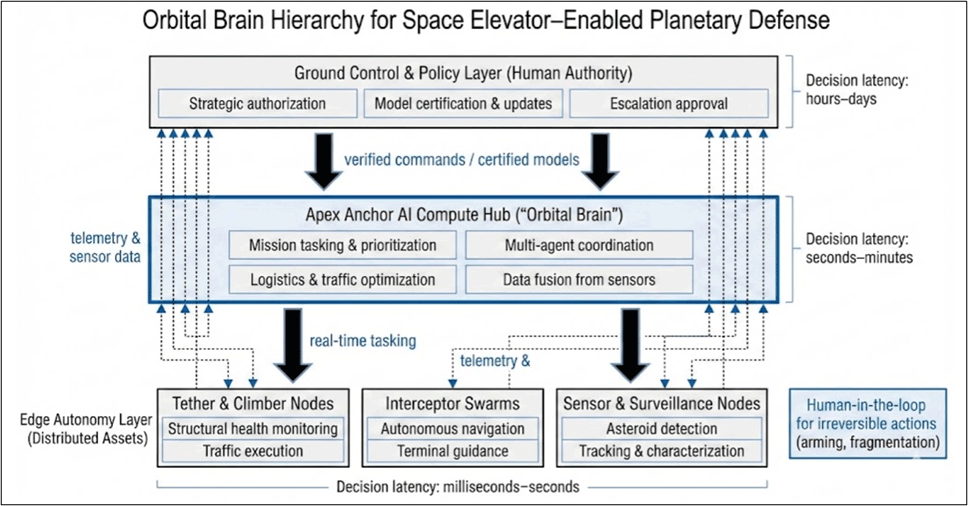
Figure 6: “Orbital Brain” conceptual layout, Credit: Muhir Kapoor. Note, although this concept is for Planetary Defence the structure is broadly suitable for an overall SE Control System.
In conclusion, the “Pathfinder” test tethers would provide a good opportunity for prototype Control sub-system verification, though the tether scale and configuration does not fully represent the full Earth SE system.
2.3.4 RIRO Mechanisms
Some form of reel-in-reel-out (RIRO) mechanism would be required at both “Pathfinder” tether end anchors for system deployment, and probably also for dynamic stability control during climber testing. These could be small-scale prototypes of the deployment systems planned for later Earth-SE tethers, starting the verification of these concepts in a representative space environment. Such testing could not fully verify the final SE deployment systems as the tether size and length would be unrepresentative, but valuable design lessons may well be learned to enhance the eventual full-scale design.
Space testing would not assist with verification of the Earth Port RIRO system, essential for tether dynamic control, but such work could continue using ground-based testing.
It is possible that a RIRO system would be needed at the SE Apex Anchor, but differences in scale and other design features mean the “Pathfinder” testing may yield very limited verification.
3. Summary
“Pathfinder” space test tethers would substantially advance the verification of the tether material and some aspects of the climber design and operations, although climbers could only operate for limited distances and might require special features to return to the “start” point and run again. Verification of the Dynamics sub-systems would be advanced significantly, given that earlier ground-based tests would be too small-scale to be representative, but again the scale and configuration may not be enough to yield adequate confidence.
My next article will discuss what additional verification opportunities may be needed in Project Phases “6” and “7” before deployment of the full-scale Earth Space Elevator.
4. REFERENCES
[1] Technology Readiness Levels - NASA
[2] Peter Robinson: September-2025 ISEC Newsletter Article, “Introduction, Technology Readiness and Design Verification”
[3] Peter Robinson: November-2025 ISEC Newsletter Article, “Part 2: The Start of Design Verification Testing”
[4] Peter Robinson: December-2025 ISEC Newsletter Article, “Part 3: Verification Testing to Prepare for Space”
[5] Peter Robinson: February-2026 ISEC Newsletter, “Article 4: “Pathfinder”, the Start of Verification Testing in Space, Part 1”
[6] Peter Robinson: Presentation at October-2018 IAC conference, Bremen (IAC-18-D4.3,6,x46522): “Proposals For Growing Space Elevator TRL by Operation of Demonstrator Systems”.
[7] Fitzgerald, Penny, Swan & Swan: “ISEC Position Paper #2014-1 ‘Space Elevator Architecture and Roadmaps”
[8] Michael ‘Fitzer’ Fitzgerald: Architecture Notes #6 (February 2017)
[9] Muhir Kapoor: “SE Enabled Infrastructure for Persistent Planetary Defense”, paper submission to ISEC 2026 SE Academic Challenge.
Tether Materials
by Adrian Nixon
More Progress for Manufacturing
Large-Area Graphene
and Other 2D Materials
Dear Reader, you will know that we constantly monitor the state of the art of manufacturing for all the candidate tether materials for the space elevator. There are four candidate materials at present: Carbon and boron nitride nanotubes (CNTs and BNNTs), hexagonal boron nitride (hBN) and graphene. The most advanced in terms of manufacturing is graphene.
As you will also know, the chemical vapour deposition (CVD) method is the leading process for making large scale sheet graphene. The starting point is a carbon containing gas such as methane. This is heated to around 1000°C degrees centigrade and guided gently over a metal surface, usually copper or nickel. The metal acts as a catalyst removing hydrogen from the carbon. The carbon rapidly self assembles atom-by-atom on the metal surface to form a layer of graphene [1].
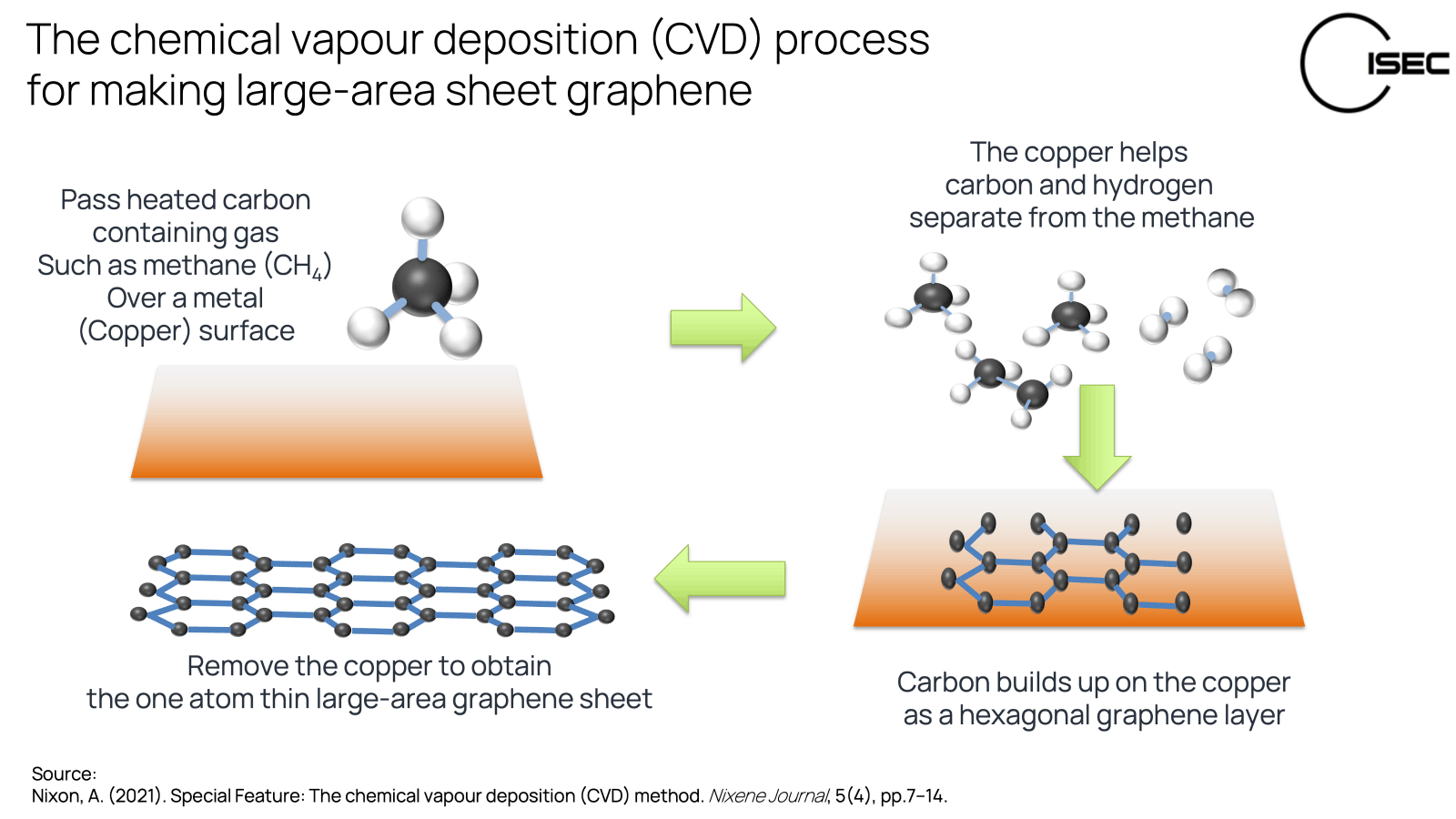
Figure 1. An overview of the chemical vapour deposition process for making graphene.
Once the surface of the metal is covered with graphene, the metal is cooled to room temperature and the graphene separated from its substrate. Dry transfer methods such as adhesive tape or cast polymer film cause damage and contaminate the graphene layer. The alternative method is the wet transfer process where the copper is dissolved in a bath of etchant and the graphene layer allowed to float on top of the liquid for collection.
This CVD process works well; however, the transfer stage of large-area CVD graphene from its substrate has long remained a limiting step in moving 2D materials from laboratory production to scalable device manufacturing. The current transfer methods are either slow, damage the graphene or create hazardous waste streams that must be treated.
A new process has been invented that addresses the separation problems…
A team at the Department of Materials Science and Engineering, National University of Singapore, Singapore has developed a new dry-transfer process [2].
They describe the process as a fully dry, etchant-free, and automated transfer platform based on adhesion control using switchable ferroelectric poly(vinylidene-fluoride-trifluoroethylene) (P(VDF-TrFE)) film.
Once the graphene layer on the copper is in contact with the PVDF-TrFE film, the next step is called corona polarisation or corona poling. A sharp high voltage tip produces a corona discharge that injects charges into/onto a dielectric or polar material, aligning dipoles and building a quasi-permanent polarization and surface charge. This creates a strong built-in electric field near the surface of the polarized PVDF-TrFE layer.
The effect of this is to weaken the effective adhesion of the graphene layer to the copper, so that mechanically applied force can preferentially pull graphene toward the polarized PVDF-TrFE layer rather than leaving it on the copper.
To help with the transfer process, a temporary thermal transfer film can be added. Subsequent heating above PVDF-TrFE’s Curie temperature (approximately 135 °C) depolarizes the film, neutralizing the interfacial charge for a clean release of the graphene. Figure 2 shows an overview of the process.
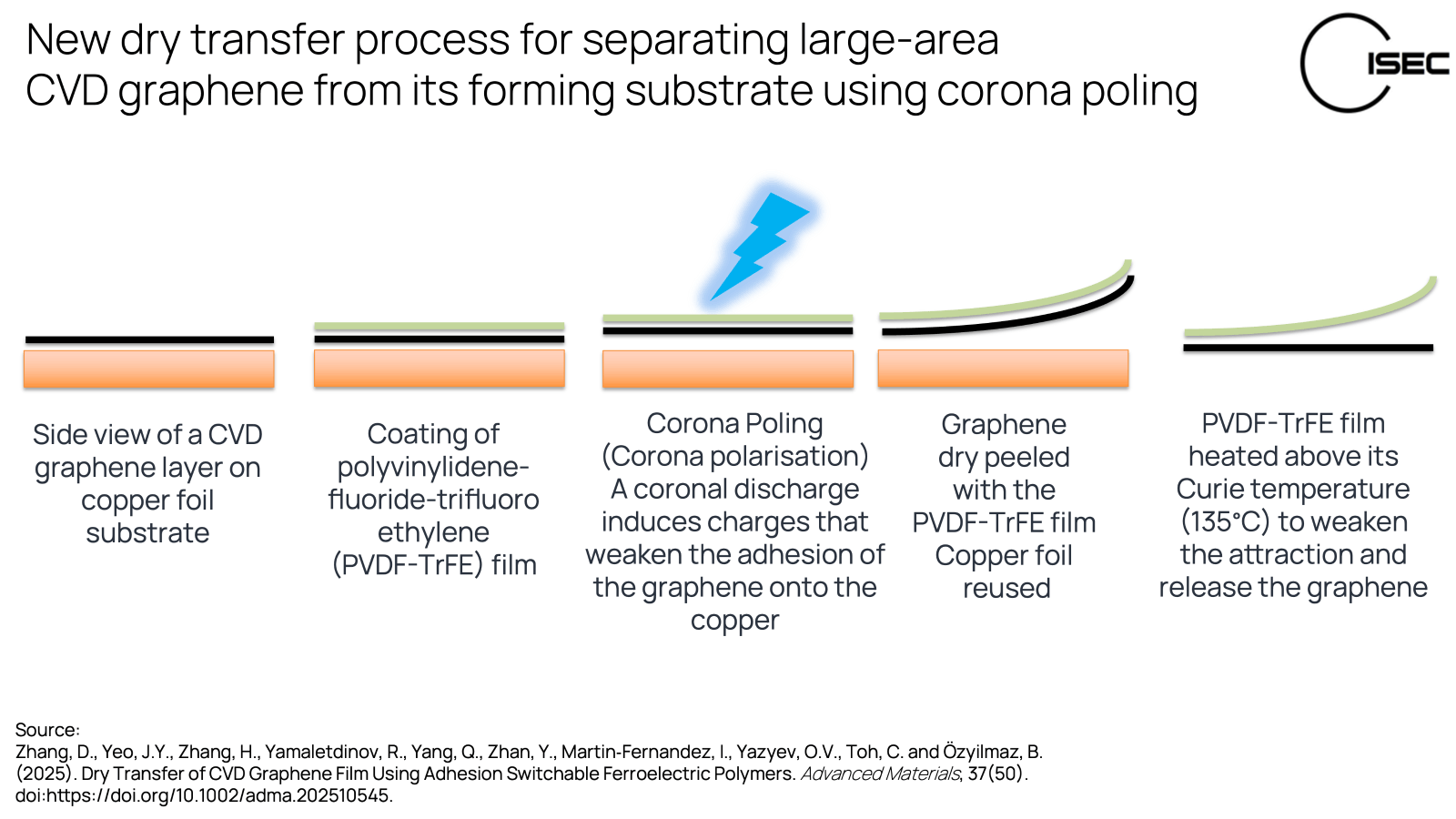
Figure 2. schematic of the new dry transfer process.
This controlled polarisation of the interfaces means the graphene can be cleanly separated from the copper and then released onto target substrates without damaging or contaminating the graphene.
The team says this new process yields crack-free graphene with >99% coverage. It also avoids chemical etchants and polymer residues and operates on minute-level cycle times for the batch process.
The team also says this method works equally for other two-dimensional (2D) materials such as molybdenum disulphide MoS2 and hexagonal boron nitride (hBN) transfer. A batch processing pilot line has also been developed to prove the automation concept. This pilot line can be seen in operation in the video link [3].
The team is now working on a continuous manufacturing process for this dry transfer process. This corona poling method promises to speed up the manufacturing bottleneck of separating graphene from its substrate without contamination and damage. It will also reduce the cost of production of CVD graphene because the copper foil substrate is being re-used. This work is being developed by the team in Singapore to make monolayer graphene for consumer electronics such as flexible touchscreens.
Could this be used to make space elevator tether material? It is a step along the way; however, a truly integrated CVD manufacturing line would need to be developed with a continuous loop of copper foil being reused for the whole process. The repeated heating and cooling of the copper foil would anneal the metal leading to cracks and fractures in the copper, limiting its reusability. Further development will be needed to make space elevator tether quality material at low cost.
References
1. Nixon, A. (2021). “Special Feature: The chemical vapour deposition (CVD) method”. Nixene Journal, 5(4), pp.7–14.
2. Zhang, D., Yeo, J.Y., Zhang, H., Yamaletdinov, R., Yang, Q., Zhan, Y., Martin‐Fernandez, I., Yazyev, O.V., Toh, C. and Özyilmaz, B. (2025). “Dry Transfer of CVD Graphene Film Using Adhesion Switchable Ferroelectric Polymers”. Advanced Materials, 37(50). doi: https://doi.org/10.1002/adma.202510545.
3. The video of the automated dry transfer batch process as supplemental information for 2 above. https://advanced.onlinelibrary.wiley.com/action/downloadSupplement?doi=10.1002%2Fadma.202510545&file=adma71454-sup-0002-MovieS1.mp4
ISEC Terminology
by Pete Swan
Update on Terminology
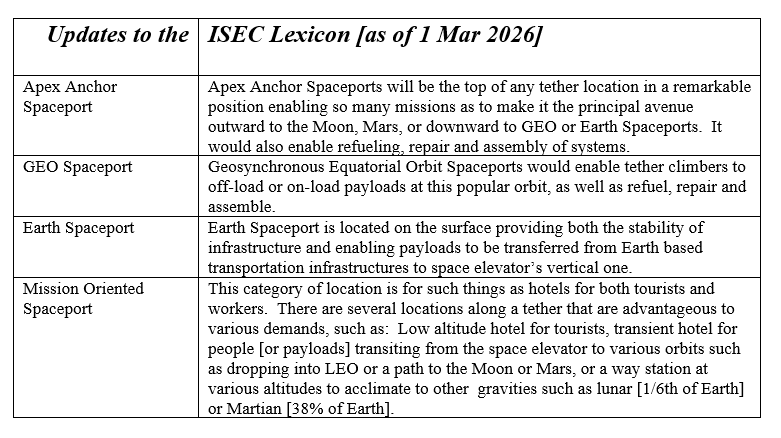
Each month, I try to keep the growth of terminology in focus for all of us who are working the issues. It seems it is time to define our locations on the tether so that we can ensure other organizations and various personnel recognize them as familiar. Spaceports have been around since the very early days, and we should leverage that familiarity of terms when we define our approach. Chief Architect Note #74 was just loaded on our website while these terms were added to our lexicon. Please quickly look these over and work with us to spread the word.
Around the Web
If you wanted to check out a series that features a space elevator, check out the new Season 5 of the Apple TV series For All Mankind.
https://x.com/forallmankind_/status/2027112093410000931?s=20
Upcoming Events:
If you have a new idea or concept, or simply a new take on an existing idea, the three main Space Elevator events this year are now all open for abstract submission.
1st IAA Planetary Sunshade Workshop
Sponsored by the International Academy of Astronautics
https://sunshadeworkshop.com/
Wednesday, May 13th through Friday, May 15th, 2026
Nottingham, United Kingdom
International Space Development Conference 2026
Sponsored by the National Space Society
https://www.isec.org/events/isdc2026
https://isdc.nss.org/
Thursday, June 4th, through Sunday, June 7th, 2026
Space Elevator Session, Saturday, June 6th
Hilton McLean Tysons Corner, Virginia
+ Abstracts for ISDC2026 are due by April 15th
Virtual ISEC Space Elevator Conference 2026
Sponsored by the International Space Elevator Consortium
https://www.isec.org/events/isec2026
Saturday, September 12th, through Sunday September 13th, 2026
+ Abstracts for our Space Elevator conference are due by June 1st
77th International Astronautical Congress
Sponsored by the International Astronautical Federation (IAF)
https://www.iac2026.org/iac-2026
https://www.isec.org/events/77th-international-astronautical-congress
Theme: “The World Needs More Space”
October 5th through October 9th, 2026
Antalya, Turkey
+ Abstracts for IAC2026 are due by February 28th
78th International Astronautical Congress
Sponsored by the International Astronautical Federation (IAF)
https://www.isec.org/events/iac2027
Monday, September 27th through Friday, October 1, 2027
Poznań, Poland
Contact Us:
Our website is www.isec.org.
You can find us on Facebook, X, Flickr, LinkedIn, Instagram, YouTube, Mastodon, Threads, Bluesky and Reddit.
Support us:
Sign up to be a member at: https://www.isec.org/membership
You can also give directly using the “Donate” link at the bottom of our website page.
Does your place of employment do matching funds for donations or volunteer time through Benevity? If so, you can make ISEC your recipient. Our 501(c)(3) number is 80-0302896.