
International Space Elevator Consortium
April 2026 Newsletter
In this Issue:
Chief Architect’s Corner
AstrotalkUK Space Elevator Interview
Space Elevator Design Verification
ISEC Terminology
WSPEC Update
ISEC Report Reaches 2,000 Reads!
Around the Web
Upcoming Events
Contact Us
Chief Architect’s Corner
by Pete Swan
International Academy of Astronautics (IAA)
Permanent Committee on Space Elevators
The IAA is a global organization that recognizes expertise in supporting space missions by electing Academicians. The list is presently about 1300 from each of the “space faring nations” with the dominant space countries having the most members inside the IAA. As Dennis Wright (ISEC President) and I are elected members, we are also members of a newly started Committee on Space Elevators.
https://iaaspace.org/about/committees/#SA-elevators
The purpose is to coordinate efforts in space elevator research and development projects across the globe and within National Space Agencies. The initial Academy efforts were to study the feasibility of space elevators and develop a “way forward”. This was accomplished with the publishing of two major research study results in 2013 and 2019. Perceptions of future capabilities for mega-projects are wide-ranging and must be stimulating enough to gain approval to move forward. A significant realization about Modern-Day Space Elevators is that they will leapfrog the rocket equation and enable humanity to move off planet. The next steps within this IAA Committee will be focused upon its intention to support any activities in connection with the topic; and, to bring within the reach of every country the opportunity to understand the potential, design approach, and benefits/issues with a developmental program. In this context, the Committee supports all activities to develop and promote concepts and processes by all user communities to conduct or participate in space elevator research and development.
If you are interested in the progress of this committee or would like to contribute to the research, please contact me at: info@isec.org Attn: Dr. Swan.
AstrotalkUK Space Elevator Interview
by Adrian Nixon
Last summer ISEC held an event to discuss strong materials for the space elevator at the Graphene Engineering Innovation Centre (GEIC), Manchester in the UK. Dennis Wright, John Knapman, Peter Robinson, and Rob Whieldon met Gurbir Singh.
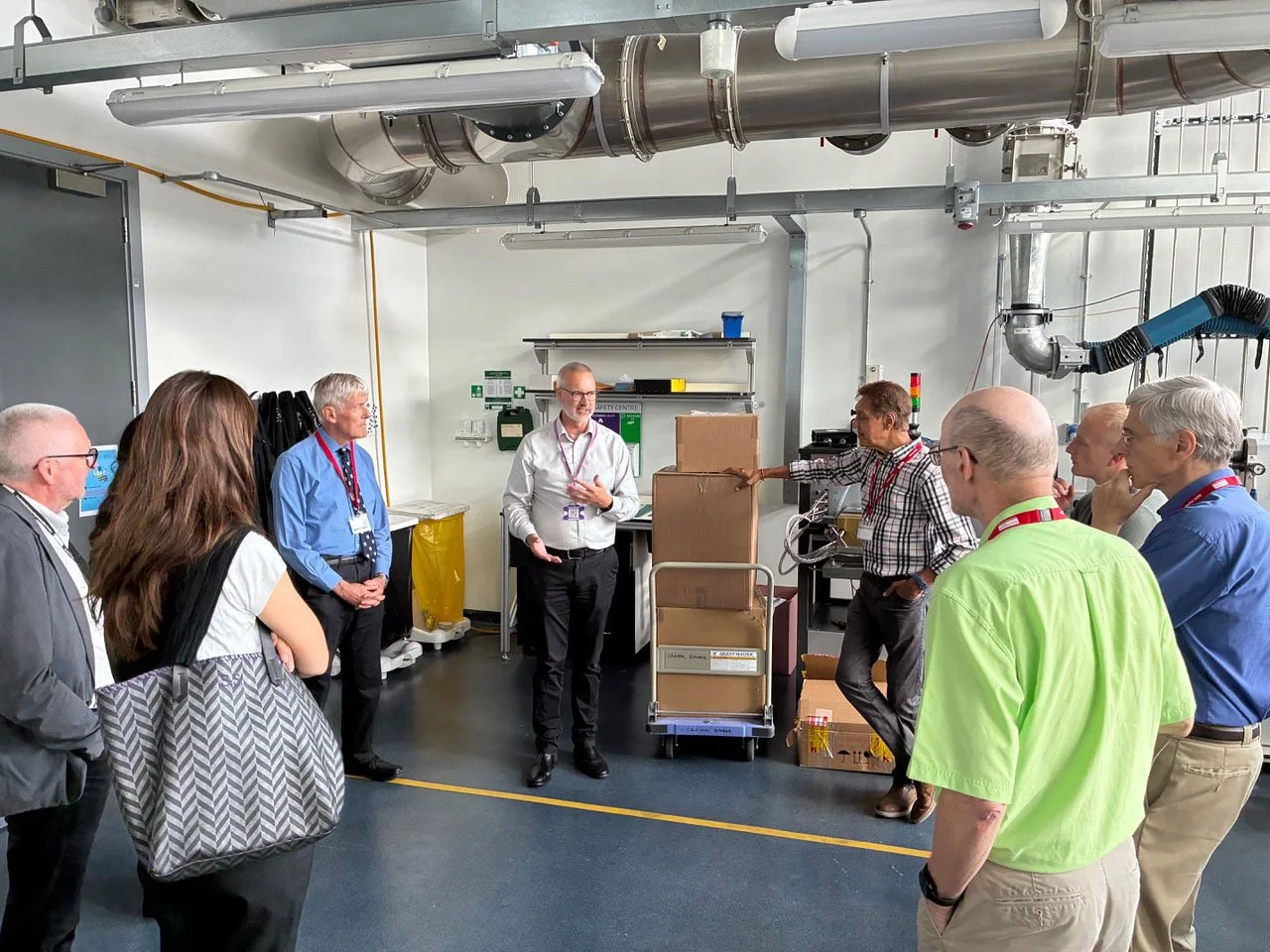
In the composites laboratory at the GEIC. Image credit: Adrian Nixon. L-R Rob Whieldon, John Knapman, James Baker, Gurbir Singh, James Greer, Dennis Wright, and Peter Robinson.
Gurbir owns a blog focusing on audio interviews with people active in the space community – AstrotalkUK. We must have impressed him because he invited us to be interviewed about graphene and the space elevator for his regular blog. This month he has published interview episode 132, with ISEC board member Adrian Nixon and Rob Whieldon, the CEO of Nixene Publishing who specialise in graphene and 2D materials.
We held the interview at the GEIC. The discussion covered a wide range. We began with a dive into the science, technology, and manufacturing of graphene and then moved on to the space elevator.
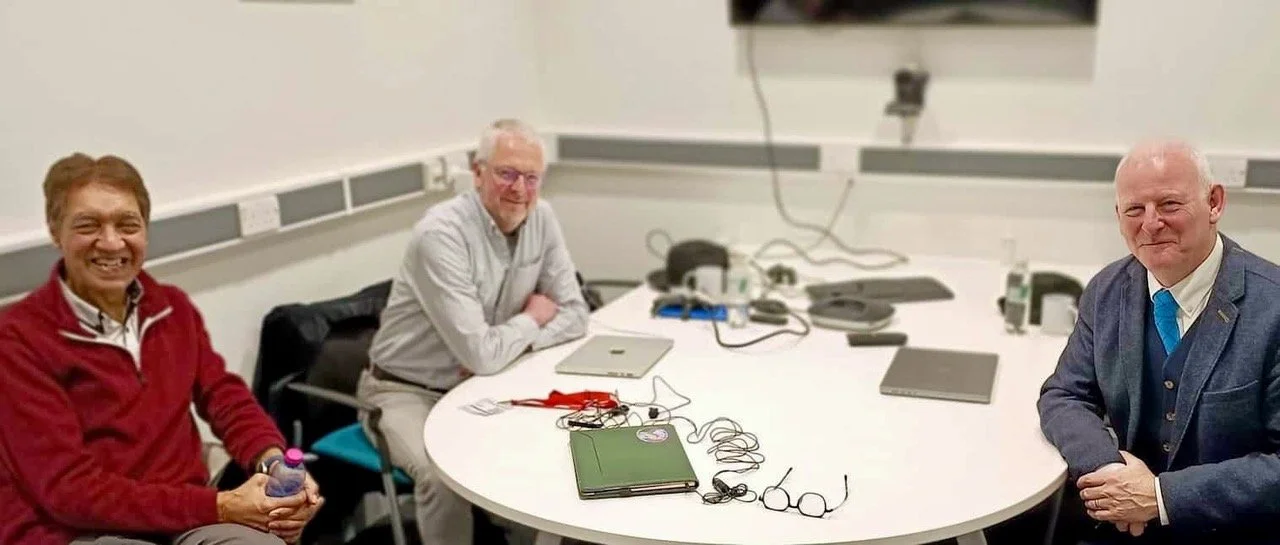
The interview at the Graphene Engineering Innovation Centre. Image credit: Gurbir Singh. L-R Gurbir Singh, Rob Whieldon, and Adrian Nixon at the GEIC.
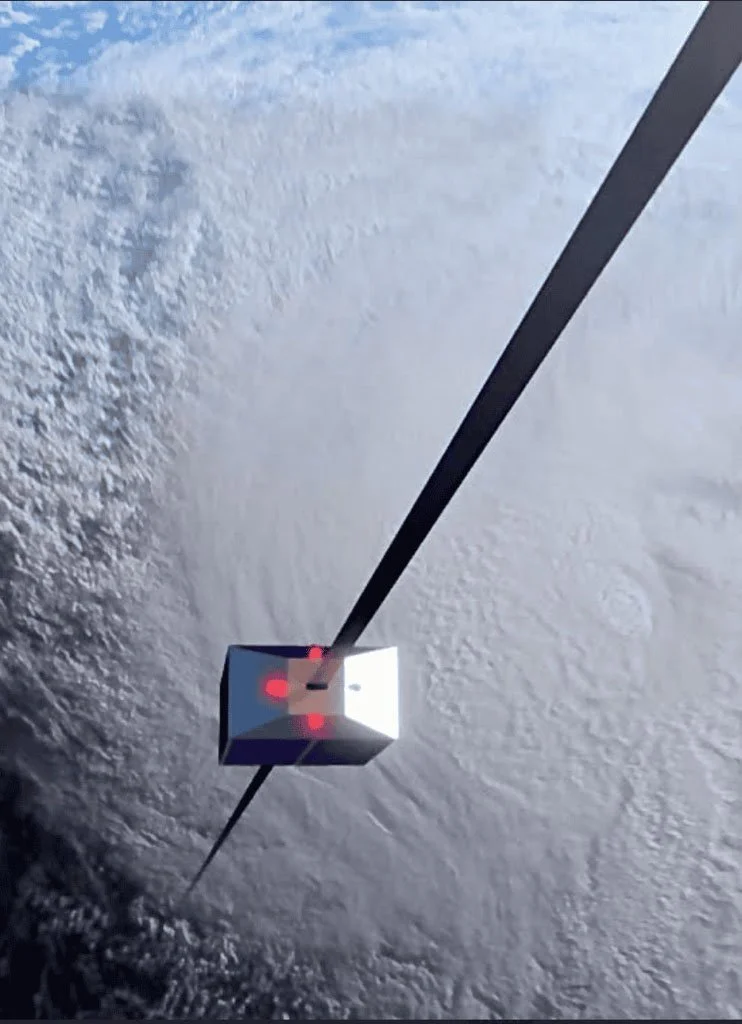
Space elevator climber ascending a graphene laminate tether. Image Credit: Dr. Pete Swan.
You can hear the audio interview by following this link to the AstrotalkUK website.
https://astrotalkuk.org/episode-132-space-elevator/
The full interview is over an hour long, so Gurbir had an artificial intelligence summarise our conversation and create a six-minute YouTube video based on our conversation. You can find the video on YouTube with the following link.
https://www.youtube.com/watch?v=PsuA3RX_2TQ
The AI did a remarkably good job of summarising the key points using our discussion. Although if you really want the proper depth and context then I would recommend setting aside an hour for the full audio.
Space Elevator Design Verification
by Peter Robinson
Article 6: Final Verification Before Earth Space Elevator Deployment
1. Introduction
This is my final article discussing the Verification of Earth Space Elevator Designs, essential before deployment of the full-scale system. Robust verification also may be needed for regulatory permissions and to counter poorly informed technical and non-technical objections.
My first article introduced project management methodologies and their application to the SE mega-project [1] [2], followed by second and third articles covering ground testing of SE sub-system designs [3] [4]. The next two articles covered “Pathfinder” orbital space tests [5] [6].
To address the matter from a project management perspective I considered the requirements of the Technology Readiness Level system (TRL, as used by NASA and others), summarised in Figure 1 below.
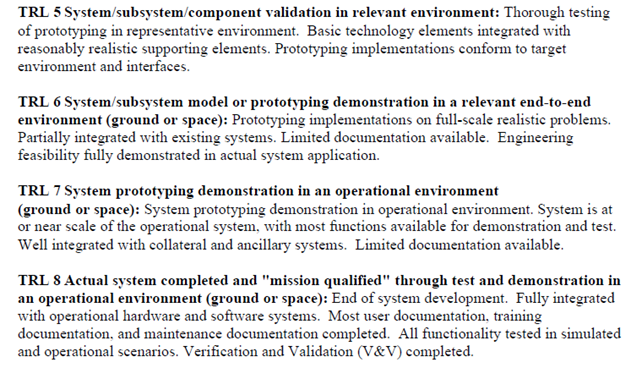
Figure 1: TRL Definition Summary. Credit: NASA.
The orbital tests described in my previous articles [5] [6] certainly address the requirements of TRL-5, and perhaps TRL-6, being “testing of prototyping in a representative environment”.
ISEC publications in 2014 [7] and 2017 [8] have suggested that ground tests and the “Pathfinder” work will also be sufficient to prepare for final system deployment, meaning that TRL-7 requirements are satisfied. These requirements may have been met by some SE sub-systems (such as climber components in common with existing spacecraft), but many Space Elevator components are totally novel and so need more thorough proving. In particular the TRL-7 requirement “at or near the scale of (the) operational system” must be addressed.
Section 2 below describes what further work might be needed to complete the Verification of the three key SE sub-systems “Tether”, “Climber”, and “Dynamics” (defined in Ref [2] Section 4).
2. Design Verification Phase 5: Sub-Systems
I outlined my thoughts on this in a presentation in 2018 at the IAC conference in Bremen [9] based on my simple literal interpretation of the TRL words. Figures 2 and 3 below reproduce my slides suggesting Asteroid Elevators to meet TRL-6.
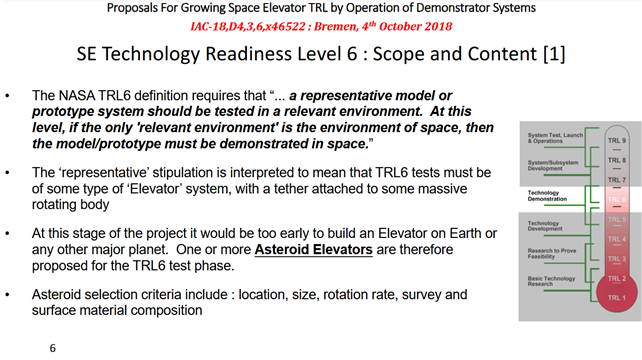
Figure 2: “Scope and Work Content for TRL-6 [1]”, from IAC-2018 Presentation by P. Robinson.
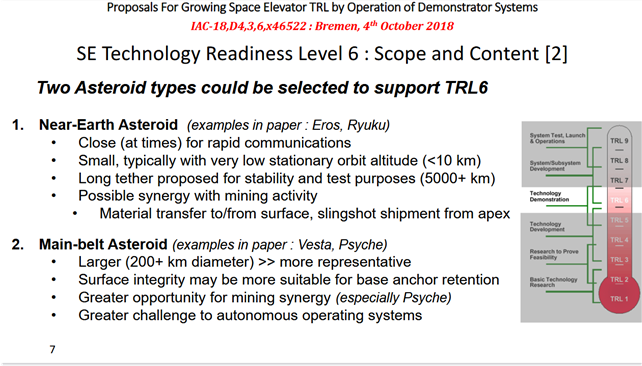
Figure 3: “Scope and Work Content for TRL-6 [2]”, from IAC-2018 Presentation by P. Robinson.
I then proposed a Mars Elevator to address the TRL-7 requirement for a larger-scale final test article, as shown in Figures 4 and 5 below.
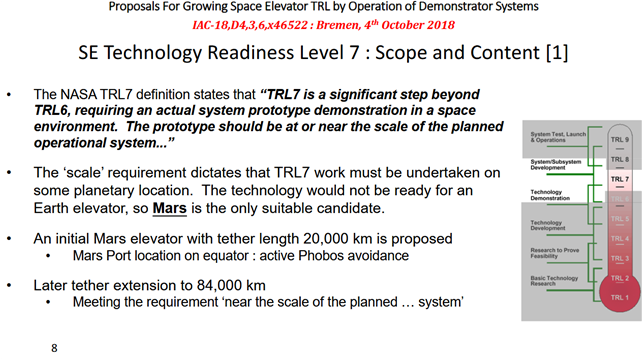
Figure 4: “Scope and Work Content for TRL-7 [1]”, from IAC-2018 Presentation by P. Robinson.
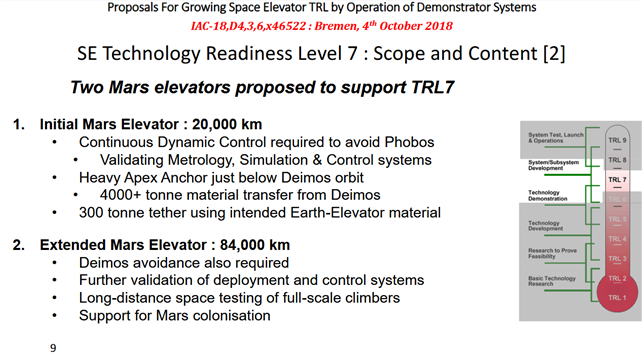
Figure 5: “Scope and Work Content for TRL-7 [1]”, from IAC-2018 Presentation by P. Robinson.
My general arguments for these two work phases are included in the IAC-2018 conference paper; see ref [9]: I will not repeat those words here, but I will review how Asteroid and Mars Elevator tests might address the Verification of the three SE sub-systems.
Note: I discussed concepts for both Asteroid and Mars Elevators in ISEC newsletters in 2024 [10] [11].
2.1 Tether Material
It could be argued that tether material verification would not significantly be moved forward by asteroid testing, and the benefits from Mars testing are also limited. Neither location would precisely match the space environment up to 100,000km Earth altitude, this aspect being better addressed by continued “Pathfinder” orbital testing. Tether degradation from passing climbers might be better explored from ground-based testing involving many more “climber” interactions with greater load factors.
2.2 Climbers
Elevator Climbers will incorporate many separate sub-systems as described in [2], the basic functionality of which will have been thoroughly tested in earlier ground-based and “Pathfinder” space testing.
Towards the end of the Verification process one of the most important requirements will be robust demonstration of overall climber reliability. When Elevator operations commence, many hundreds of climbers will be manufactured each year, and each must have a high probability of travelling the 35,700+ km from the Earth Port to (at least) the GEO node. This means each climber must have a Mean-Time-Before-Failure (MTBF) far in excess of that distance, perhaps of the order of one million km (depending on what failure rate can be tolerated).
Commercial practices for demonstration of MTBF involve the complex field of Reliability Engineering that I will not explore in detail here, but very simply the process involves running many prototypes in representative operational conditions and recording all failures (minor or serious). An MTBF figure is calculated based on the number of prototypes being tested and their time or distance of operation at each failure. In the early stages of a Reliability Growth project phase the calculated MTBF will be very low, but this figure should increase as more prototypes are tested and their accumulated “mileage” increases.
For the Space Elevator project, a decision must be made as to whether ground-based testing could be used to grow the MTBF, but I suspect that this may not be valid from a Reliability Engineering perspective. Extensive climber operation in space may well be needed, and the “Pathfinder” tethers as described earlier [5] [6] [7] [8] are simply too short to allow enough long-distance climbing. Longer and more numerous “Pathfinder” orbital tethers could be an option, but the potential greater length of Asteroid and Mars Elevators might be a better choice.
The need for climber reliability is another argument for having smaller climber modules rather than single larger climbers, for example a 20-tonne (gross) climber could be an assembly of (say) five 4-tonne climber modules. More of the smaller prototype modules could be tested, and each might only require a lower MTBF value if non-catastrophic failure of single modules before GEO could be accepted.
2.3 Dynamics
As described before, the primary “Dynamics” sub-systems (Metrology, Simulation, Control, and RIRO) cannot be demonstrated at the necessary scale using ground-based testing, and the orbital “Pathfinder” tethers are very different from a long tether attached to a rotating massive body such as an Asteroid or Mars.
2.3.1 Metrology
The Metrology sub-system is one aspect of “Dynamics” that might be adequately verified during the “Pathfinder” missions, being in the correct near-Earth environment and so able to make use of GPS and other location systems in Earth orbit.
2.3.2 Simulation
The Simulation sub-system in isolation might be adequately verified before or during the Earth orbit test stage, being primarily a software system and therefore potentially testable in a virtual environment.
That said, the integration of the simulation system with the Metrology and Control sub-systems cannot be fully assessed virtually. In particular, the linkage to the Control system is critical.
2.3.3 Control
Control is the critical aspect of the whole Dynamics sub-system, and at present is perhaps the least explored in detail. My previous article [6] mentioned a student software architecture concept of an “Orbital Brain”, a complex AI-driven system constantly updated by Metrology measurements, orbital situational data, and operational requirements, with real-time simulation exploring and finding the optimum control outputs.
The future task of the Control system is becoming more complex with the rapidly growing number of LEO satellite swarms such as Starlink, and in the near future orbital data centres and massive Space-Based Solar Power (SBSP) stations. (If these future systems were placed at GEO they would have a negligible impact, but present plans are suggesting lower orbits.) These will all increase the workload of the Control System, demanding greater tether positional control accuracy.
Verification of such a complex and critical system must be thorough and incontrovertible, yielding adequate confidence before deployment of even a lightweight “seed” Earth Elevator. I do not consider that this could be achieved based solely on shorter orbital “Pathfinder” tethers; there will be a good case for extensive testing on asteroids and/or Mars, but this must be a decision for the project leadership at a later stage of the project.
2.3.4 RIRO Mechanisms
A Reel-In-Reel-Out (RIRO) mechanism is the one mechanical sub-system that I have placed in the “Dynamics” category. There will need to be a RIRO system at the Earth Port for tension control as climbers are loaded and launched, and for other reasons, but this can be verified by ground-based testing.
Future simulation and operational analysis will determine if a RIRO system is needed at the Apex Anchor, but this design cannot be verified easily. Any Apex RIRO (and power supply) must operate in a low-gravity vacuum environment whilst winching many km of tether under considerable tension (perhaps hundreds tonne-f). These conditions could not be exactly duplicated on the Earth, or during “Pathfinder” orbital tests with just a 1000km tether: a rapidly-rotating asteroid might be the best location to fully replicate Earth Apex conditions for final verification. (The rotation rate of Mars dictates a far longer tether.)
3. Summary
The initial stages of the Space Elevator mega-project will depend on the invention of a suitable tether material and the development of the machines for high-quantity, high-quality manufacture. As the project proceeds, the system concepts and designs may diverge from those of today and impact the accuracy of my attempts to predict the verification process.
My thoughts on the final project stages before full-scale Earth Elevator deployment are therefore speculative, but I hope my ideas on final verification using Asteroid and/or Mars Elevators are of some interest. The tether material will always be a critical part of the system, but I believe that control system demonstration will become equally important before tether deployment can be considered. After deployment the emphasis will shift to operations, relying on continuous dynamics control and the durability & reliability of the climbers themselves.
4. REFERENCES
[1] Technology Readiness Levels - NASA
[2] Peter Robinson: September-2025 ISEC Newsletter Article, “Introduction, Technology Readiness and Design Verification”
[3] Peter Robinson: November-2025 ISEC Newsletter Article, “Part 2: The Start of Design Verification Testing”
[4] Peter Robinson: December-2025 ISEC Newsletter Article, “Part 3: Verification Testing to Prepare for Space”
[5] Peter Robinson: February-2026 ISEC Newsletter, “Article 4: “Pathfinder”, the Start of Verification Testing in Space, Part 1”
[6] Peter Robinson: March-2026 ISEC Newsletter, “Article 5: The Start of Verification Testing in Space, “Pathfinder”, Part 2”
[7] Fitzgerald, Penny, Swan & Swan: “ISEC Position Paper #2014-1 “Space Elevator Architecture and Roadmaps””
[8] Michael “Fitzer” Fitzgerald: Architecture Notes #6 (February 2017)
[9] Peter Robinson: Presentation at October-2018 IAC conference, Bremen (IAC-18-D4.3,6,x46522): “Proposals For Growing Space Elevator TRL by Operation of Demonstrator Systems”.
[10] Peter Robinson: June- & July-2024 ISEC Newsletters, “Part 2a: ASTEROIDS (AND CERES)”, “Part 2b: ASTEROIDS – CONCLUSION”
[11] Peter Robinson: September- & October-2024 ISEC Newsletters, “Part 4a: Mars – Introduction”, “Part 4: Mars (2)”
ISEC Terminology
by Pete Swan
“Lexicon in Many Languages”
As discussed in my “Chief Architect Corner”, The International Academy of Astronautics has created a Permanent Committee on Space Elevators to investigate around the world the advances and status of those permanent infrastructures. Along the way, the committee is creating a lexicon of terminology relating to space elevators. ISEC has provided the start of the lexicon (see on our website), but there is a need for multiple language versions of that list of terms. If you have that skill set, please let me know. info@isec.org Attn: Dr. Swan.
WSPEC Update
by Mordy Friedman
WSPEC 2026 Q1 Update
It feels like just yesterday we were wrapping up 2025, but the first quarter is already behind us. Our mission has been and continues to be to accelerate the progress of space elevator technology through cooperative, global competitions. As we continue building toward our inaugural global competition cycle, I want to share some of the concrete steps we've taken this past quarter to help make that a reality.
Competitions & Global Expansion We are actively expanding our competition roadmap for the upcoming year:
+ Central Asia Launch: We have officially launched our Kazakhstan competition! A huge thank you to our local organizers, Icarus Rocketry and Yurt Space, for working with us to make this a reality and bring space elevator competitions to Central Asia. To support this, we are also hosting a targeted virtual workshop to help develop the local teams and ecosystem.
+ Another Region in the Cycle: We are currently in the preliminary planning stages for our next competition, following the Kazakhstan event. Stay tuned—we will be officially announcing this in the coming months!
+ ISDC 2026 Workshops: We are also slated to host three new, hands-on physical workshops at the ISDC this June in Virginia. Participants will get a chance to build a mini space elevator climber and learn the basic considerations that go into the technology. If you’ll be at the ISDC this year, we would love to see you there. For further details or to register, please visit the following link:
https://www.wspec.org/workshop-signup-isdc
Equipping & Supporting New Teams A major focus for us right now is lowering the barrier to entry and making sure all our competitors, both old and new, are fully equipped to succeed. We are currently developing a comprehensive new team kit—a welcome package for new teams joining the competitions that provides everything they need to understand how to start, fund, and operate a team.
To pair with this, we are building out a dedicated mentorship group to provide real-time guidance and support. We’ve also officially launched our community Discord server to tie all of this together, giving teams a centralized place to collaborate, ask questions, and get ready to compete.
Internal Growth & Looking Ahead To support this global push, we have been reinforcing our foundations behind the scenes. The core WSPEC operational team has now grown to over 20 members and volunteers. To ensure we can operate cohesively across different time zones, we recently transitioned our internal operations to a unified digital task management platform, Monday.com.
You may have already noticed some solid updates to our website recently, and we have some even bigger digital developments currently in the works—consider this your official teaser. Finally, we are actively professionalizing our media, so expect to see more video content rolling out on our YouTube channel soon.
Thank you to everyone who has followed our journey, joined our community, or stepped up to form a team. If you haven’t gotten involved yet, we warmly welcome you to join us in any way you can.
As a growing organization, we are fueled by the incredible support of our community. If you believe in what we are building and want to help push this mission forward, please consider making a donation. Every contribution directly supports our teams and helps us accelerate these global competitions.
https://www.zeffy.com/en-US/donation-form/world-space-elevator-competitions
We are building the future together, and we are just getting started.
ISEC Report Achieves a Major Milestone
The International Space Elevator Consortium has conducted two-year studies since its inception, with the first one released in 2010. However, the most “read” recent study within the global research community is from 2020 and is titled "Space Elevators are the Transportation Story of the 21st Century" and has achieved 2,000 reads through ResearchGate! A diverse team of authors presented this to the community: Michael Fitzgerald, Michael Peet, Vern Hall, James Torla, Cathy Swan, and Peter Swan.
The abstract reads as:
“A new paradigm has emerged!
+ Space elevators can be accomplished because we now have a tether material
+ Space elevators will enable interplanetary missions
+ Fast transit to Mars (as short as 61 days, with variations out to 400+)
+ Can release towards Mars EVERY day (no 26-month wait)
+ Can move massive amounts of cargo (180,000 MTs/year to GEO-beyond)
+ Space elevators are Earth-friendly
+ Space solar power replaces 100s of coal power plants
+ No rocket exhaust to contribute to global warming
+ No additional space debris
+ Opens up remarkable commercial enterprises at Earth Port, GEO Region+
+ Offer to all future scientists: any size science experiment, any solar system destination, releases every day towards multiple scientific destinations.”
All of the 16 study reports accomplished over the last 16 years analyze significant areas of importance to the development of Modern-Day Space Elevators. They can be viewed and downloaded at: https://www.isec.org/studies
Around the Web
Adrian Nixon was interviewed about the Space Elevator by Esquire, check it out!
Upcoming Events:
If you have a new idea or concept, our virtual conference in September is still accepting abstracts, see details below.
1st IAA Planetary Sunshade Workshop
Sponsored by the International Academy of Astronautics
https://sunshadeworkshop.com/
Wednesday, May 13th through Friday, May 15th, 2026
Nottingham, United Kingdom
International Space Development Conference 2026
Sponsored by the National Space Society
https://www.isec.org/events/isdc2026
Thursday, June 4th, through Sunday, June 7th, 2026
With WSPEC Workshops June 4th and 5th; see article above
Space Elevator Session, Saturday, June 6th
Hilton McLean Tysons Corner, Virginia
Virtual ISEC Space Elevator Conference 2026
Sponsored by the International Space Elevator Consortium
https://www.isec.org/events/isec2026
Saturday, September 12th, through Sunday September 13th, 2026
Abstracts for our Space Elevator conference are due by June 1st
77th International Astronautical Congress
Sponsored by the International Astronautical Federation (IAF)
https://www.iac2026.org/iac-2026
https://www.isec.org/events/77th-international-astronautical-congress
Theme: “The World Needs More Space”
October 5th through October 9th, 2026
Antalya, Turkey
78th International Astronautical Congress
Sponsored by the International Astronautical Federation (IAF)
https://www.isec.org/events/iac2027
Monday, September 27th through Friday, October 1, 2027
Poznan, Poland
Contact Us:
Our website is www.isec.org.
You can find us on Facebook, X, Flickr, LinkedIn, Instagram, YouTube, Mastodon, Threads, Bluesky and Reddit.
Support us:
Sign up to be a member at: https://www.isec.org/membership
You can also give directly using the “Donate” link at the bottom of our website page.
Does your place of employment do matching funds for donations or volunteer time through Benevity? If so, you can make ISEC your recipient. Our 501(c)(3) number is 80-0302896.